

Treatment for Trauma & PTSD with Hypnotherapy Norwich
Trauma & PTSD Therapy in Norwich
We all experience difficult or traumatic events at some point in our lives. For many people, the mind and body are able to process these experiences naturally, allowing them to recover and move forward. But for others, the impact of trauma can linger — disrupting daily life and emotional wellbeing.
If you’re struggling with the after-effects of trauma or post-traumatic stress disorder (PTSD) in Norwich, you’re not alone — and effective help is available.
Understanding Trauma and PTSD
After a traumatic experience, some people find themselves caught in painful memories or emotions that seem impossible to escape. These reactions can take the form of flashbacks, nightmares, anxiety, or emotional numbness. In some cases, people may experience Complex PTSD (CPTSD), often linked to repeated or long-term trauma, such as childhood abuse or neglect.
Trauma can also lead to feelings of guilt, shame, or self-blame — especially when you believe you “should have done something differently.” Others may not recall all the details of what happened, only fragments or sensations that cause distress without clear explanation.
Whatever your personal experience, trauma can leave you feeling disconnected from yourself and your sense of safety in the world.
How Trauma Therapy Can Help
Professional trauma therapy in Norwich provides a safe and supportive environment to help you process painful experiences and restore emotional balance. Using gentle and effective approaches — including hypnotherapy for trauma — it’s possible to heal the emotional and psychological wounds of the past.
Therapy can help you:
Process and release traumatic memories safely
Reduce flashbacks, anxiety and hypervigilance
Rebuild self-confidence and emotional stability
Reconnect with a sense of control and wholeness
Many clients find that trauma-focused hypnotherapy supports them in re-establishing calm, resilience, and a renewed sense of self.
Begin Your Recovery
If you’re seeking PTSD or trauma therapy in Norwich, compassionate, professional help is available. Whether you’re dealing with post-traumatic stress, complex PTSD, or the lasting impact of childhood trauma, therapy can help you move beyond survival and begin to thrive again.
Please book a confidential consultation to discuss your specific needs and explore how trauma therapy can support your recovery.
Understanding trauma
-
The word trauma comes from the Greek word meaning wound*.
Whilst trauma can and does sometimes result in physical injury, the focus of therapy is in healing the unseen wounds left by trauma, physical or otherwise; wounds that are at their essence, a separation between our thinking mind and our feeling body.
The purpose of therapy is to heal this inner splitting in a way that allows the person to return to living with a sense of wholeness, safety, peace and self-confidence.
*The word therapy comes from the Greek word therapeia meaning healing.
-
Trauma takes many forms and one may be traumatising for one person will be different to another, depending largely on the resources available to respond.
In the simplest terms, our system may become traumatised if we experience something that is overwhelmingly threatening and for which we are unable to fight off or escape from.
This applies most if the threat is our physical safety as in the case of a physical assault or accident or our ability to find social connection as in a child who is emotionally neglected, in many cases it will be both given that our need for safety and social connection are interdependent.
-
When we encounter the overwhelming conditions that give rise to trauma, our system can become disordered and thrown out of balance.
If for example the trauma caused intense physical / emotional pain, then the system is forced to adapt in a way that reduces our awareness of that pain, a part of us retains the knowledge of the pain, unconsciously whilst another part shifts our focus away from the pain through distraction or numbing behaviours.
Often we will unconsciously seek to resolve the trauma in ways that feel inappropriate and disruptive to life, something known as ‘acting out’.
As mentioned above, this separation or splitting, is the wound of post-traumatic trauma (or stress) disorder.
-
When we understand the post-traumatic response to be an intelligent adaptation of our system, (constricted as we may be), we can find compassion and even gratitude for a mindbody that was trying to do its best.
Understandably, the therapy process is not in changing the material facts of the past but rather the unconscious connections we have with that past, the connections that keep the trauma alive in the present, and more importantly, keep us from living life in fullness and flow.
Fundamentally, we work to reset the system by helping it to realise that whatever happened then, is not happening now. Allowing the mindbody to reset a sense of safety and ability for healthy connection.
-
The approach to treating and releasing a person from the limiting after-affect of their traumatic experiences is unique in every case, based on the individual and their experiences.

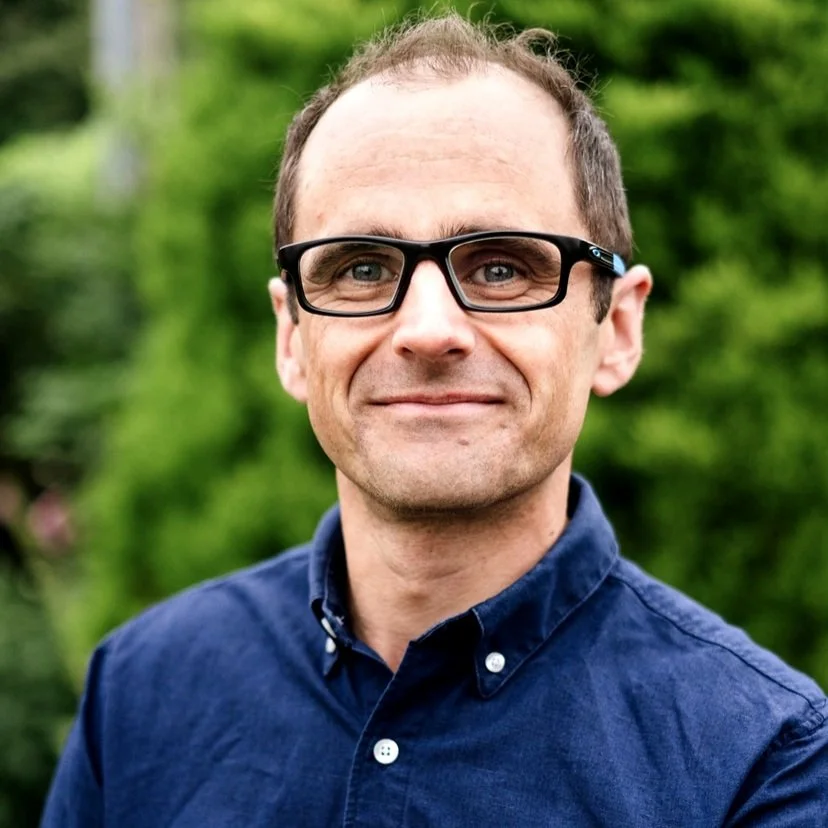
Tom Carter - Private Therapist & Coach
Trauma-informed Integrative Approach
Online or In-Person (Norwich, UK)
Fully Insured & DBS Checked
GHSC Accredited (GQHP)